
At LifeVytal, we believe longevity isn’t about extreme routines or complicated hacks. It’s about doing the simple things well — and sleep is one of the most powerful places to start.
Good sleep doesn’t just help you feel rested tomorrow. Over time, it supports your heart, brain, metabolism, mood, and overall lifespan. In short: people who sleep well tend to live longer — and live better.
Let’s break down the sleep habits that truly matter for long-term health.
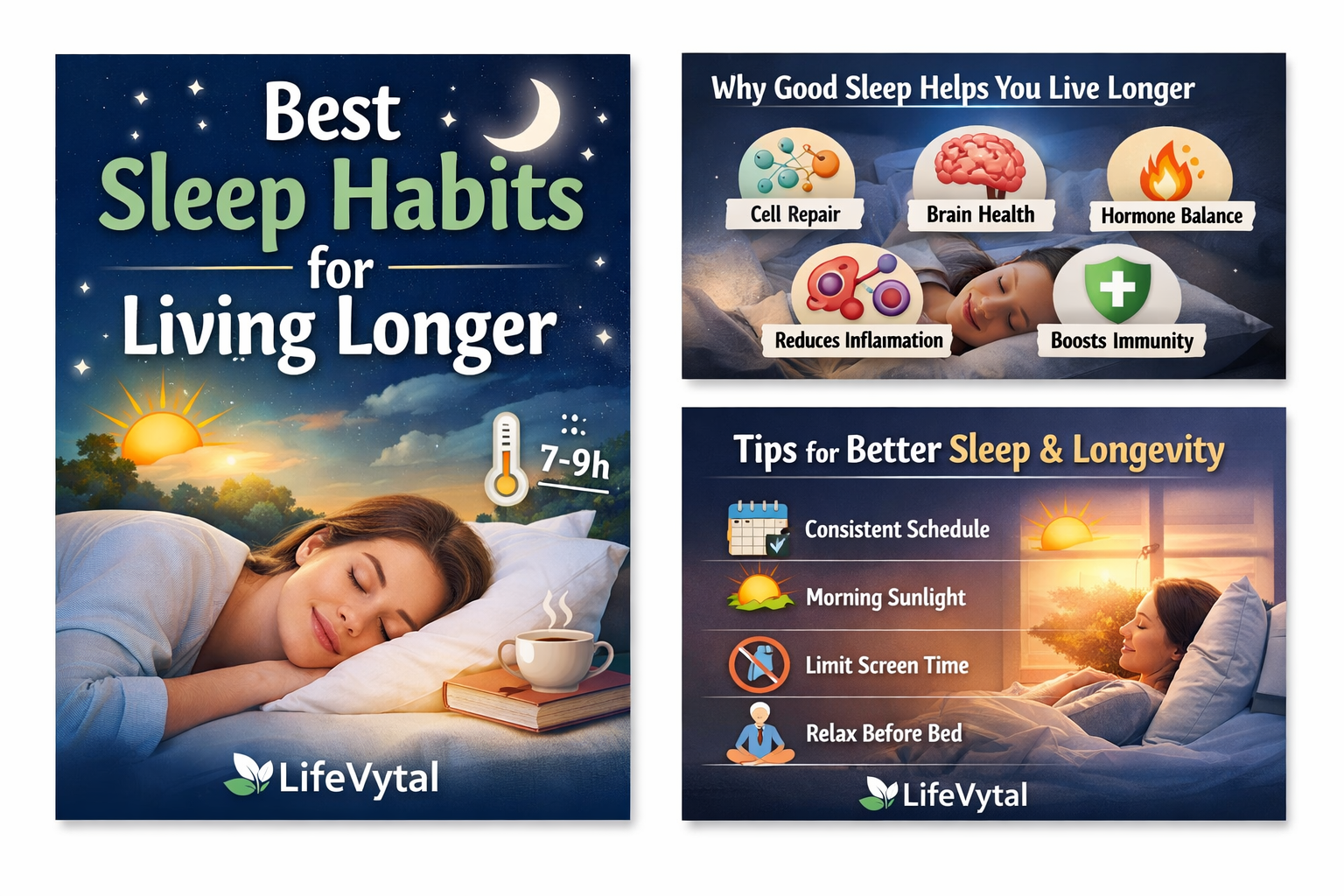
Why Sleep Matters for Longevity
While you sleep, your body is busy doing important work:
- Repairing cells and tissues
- Supporting brain health and memory
- Balancing hormones that affect aging and stress
- Reducing inflammation
- Strengthening your immune system
When sleep is constantly cut short or poor in quality, these processes suffer — and that can speed up aging over time.
Sleep isn’t wasted time. It’s daily maintenance for a longer life.
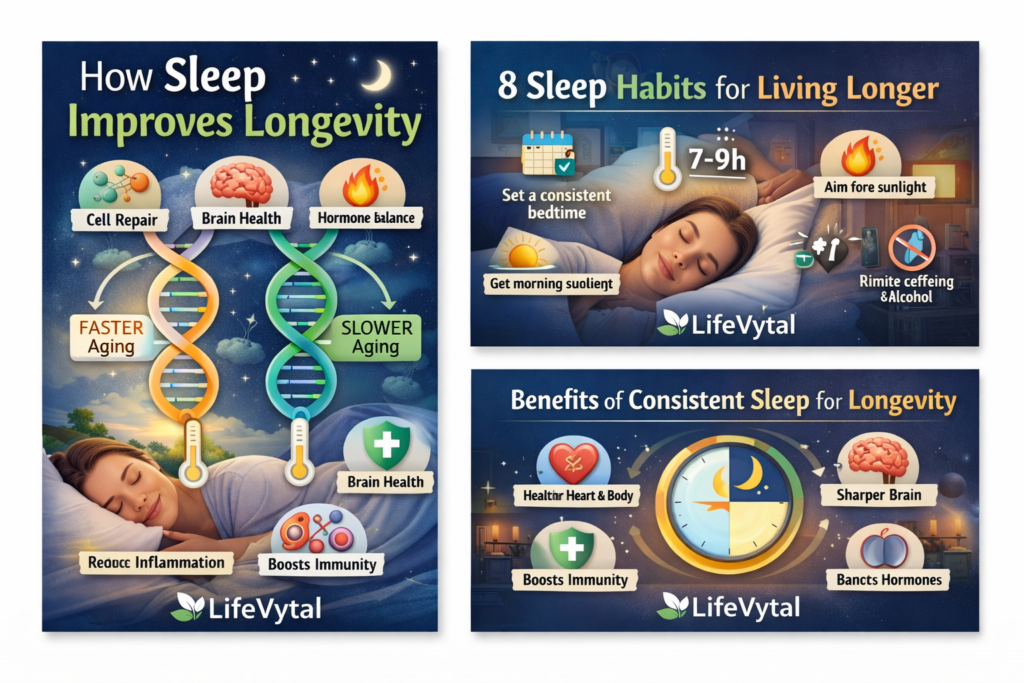
1. Go to Bed and Wake Up at the Same Time
Your body loves rhythm. A consistent sleep schedule helps regulate your internal clock, making it easier to fall asleep and wake up naturally.
Try this:
- Pick a bedtime and wake time you can stick to most days
- Keep weekends within about an hour of your usual schedule
Consistency helps your body feel safe — and safe bodies rest better.
2. Aim for 7–9 Hours of Sleep
Most adults feel and function best within this range.
- Regularly sleeping less than 6 hours is linked to higher health risks
- Sleeping far more than needed may signal poor sleep quality
Instead of chasing a perfect number, focus on how refreshed you feel during the day.
3. Get Natural Light in the Morning
Morning sunlight is one of the simplest ways to improve sleep at night.
It helps:
- Set your circadian rhythm
- Boost daytime energy and mood
- Support hormone balance
Even 10–20 minutes outside in the morning can make a real difference.
4. Reduce Screen Time Before Bed
Phones, TVs, and laptops give off blue light, which can delay melatonin — the hormone that helps you fall asleep.
Friendly habits:
- Dim lights in the evening
- Put screens away 60 minutes before bed
- Use night mode if you must be on a device
Better melatonin = better sleep = better aging.
5. Make Your Bedroom Sleep-Friendly
Your sleep environment matters more than most people realize.
For deeper sleep:
- Keep the room cool
- Make it as dark as possible
- Reduce noise or use steady background sound
Think of your bedroom as a recovery space, not just a place to scroll.
6. Be Smart With Caffeine and Alcohol
Caffeine can stay in your system for hours, even if you don’t feel wired.
- Try to avoid caffeine in the late afternoon and evening
- Alcohol may make you sleepy, but it disrupts deep sleep
For longevity, quality sleep beats quick fixes.
7. Create a Simple Wind-Down Routine
Your body needs a signal that the day is ending.
Some calming ideas:
- Reading a physical book
- Light stretching or slow breathing
- Writing down thoughts or gratitudes
- Taking a warm shower
Doing the same few things each night trains your brain to relax faster.
8. Move Your Body During the Day
Regular movement supports both sleep and long-term health.
- Walking, strength training, or light cardio all help
- Try to avoid intense workouts right before bed
When your body moves well during the day, it rests better at night.
The LifeVytal Way: Progress Over Perfection
You don’t need to change everything at once. Even one or two better sleep habits can improve your energy, mood, and health over time.
Longevity is built slowly — night by night.
Final Thought
If there’s one habit worth protecting, it’s your sleep. A well-rested body ages more gracefully, thinks more clearly, and lives more fully.
At LifeVytal, we see sleep not as a luxury — but as a foundation for a longer, healthier life.
Leave a Reply